
Restaurant Equipment Financing Canada
Original publisher: Mehmi Financial Group · Published · Source updated
Canada-Wide · Restaurant & Food Service
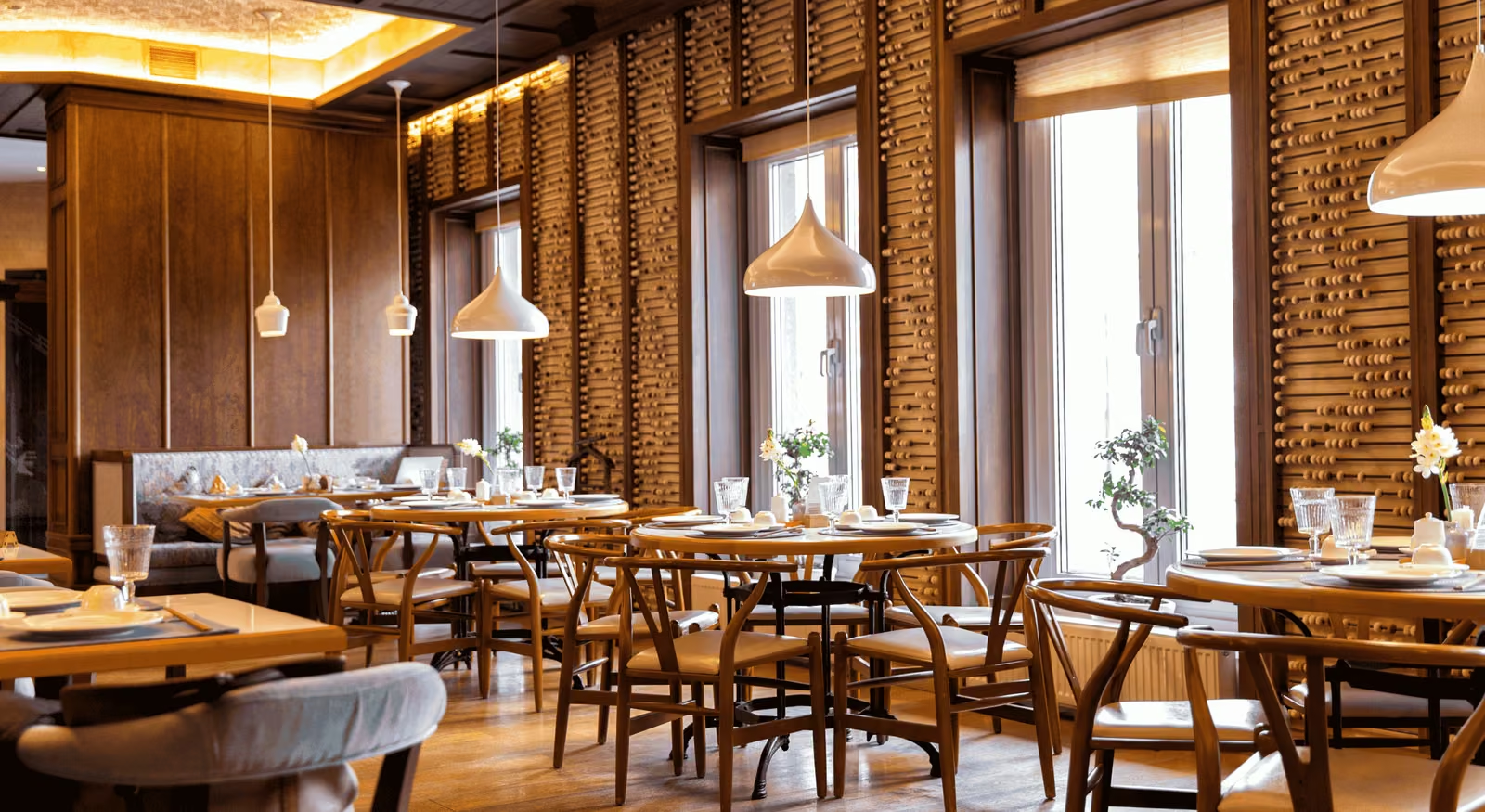
Quick answer: Restaurant equipment financing in Canada can use equipment loans, leases or other eligible structures. New or weaker-credit owners should budget the full opening project, preserve operating cash and compare the payment with a realistic sales ramp.
BDC’s equipment-financing guide emphasizes the complete financing structure when comparing offers.
Key takeaways
- Separate long-life equipment from renovation, smallwares and working-capital needs before choosing a financing structure.
- New restaurants and weaker-credit owners usually need stronger documentation, more liquidity and a more conservative payment plan.
- Installation, utilities, deposits and opening cash can matter as much as the equipment invoice.
On this page
- Why “bad credit” doesn’t automatically mean “no” for restaurant equipment
- What restaurant equipment can usually be financed in Canada (and what’s harder)
- The lease-first options that still work with bad credit (Canada)
- The “bad credit trap” most new restaurant owners fall into (contrarian but real)
- What lenders actually require for weak credit restaurant files
- How “bad credit” changes your deal terms (and how to negotiate smarter)
- A simple “payment comfort” mini-calculator (use before you apply)
- Tax and Canadian “gotchas” restaurants should know
- Options at a glance (new owner + bad credit)
- How to improve approval odds in 30 days (without “credit repair theater”)
- Illustrative scenario: bad credit new owner, equipment approved without choking cash flow
- When to talk to Mehmi (calm CTA)
Broker insight: A restaurant can be fully equipped and still be undercapitalized. Before financing the kitchen, build a complete opening budget that keeps payroll, rent, food inventory and a realistic ramp-up reserve visible instead of treating the equipment invoice as the entire project cost.
Why “bad credit” doesn’t automatically mean “no” for restaurant equipment
If you’re new and your credit is bruised, lenders aren’t only judging you. They’re judging the risk of the deal.
Underwriters think in two layers:
- Will you pay? (Probability of Default / PD)
- If something goes wrong, what can we recover? (Loss Given Default / LGD) and how big is the exposure? (Exposure at Default / EAD)
Leasing works well here because the equipment is the collateral and the structure can be tuned (down payment, deposits, term, residual) to reduce lender risk.
Plain-English takeaway:
If your credit score is low, you don’t “fix” it with a speech. You fix it with structure + proof.
What restaurant equipment can usually be financed in Canada (and what’s harder)
Key point: Lenders prefer equipment that’s easy to value, easy to resell, and essential to operations.
Typically financeable:
- Cooking line: ranges, ovens, combi ovens, fryers, grills
- Refrigeration: walk-ins, reach-ins, prep tables, freezers
- Dishwashers, ice machines
- POS + related hardware
- Some restaurant tech (KDS screens, basic ordering hardware)
Harder (but not impossible):
- Used equipment without a clear invoice/serials
- Custom-built items or heavily modified gear
- Smallwares (often too low-value unless bundled)
If you want a “what can be bundled” lens, Mehmi’s restaurant equipment overview is a helpful reference point. (Mehmi Financial Group)
The lease-first options that still work with bad credit (Canada)
1) Equipment leasing (best “starter” structure in most cases)
Key point: If you’re a new owner, leasing can get you operating faster while preserving cash for payroll, food costs, and rent deposits.
How it’s commonly structured for weaker credit:
- Higher down payment (or refundable security deposit)
- Shorter term or conservative residual
- Stronger documentation package
- Personal guarantee (common for new corps)
If you want a restaurant-specific explainer on leasing structures and what approvals look like in practice, see Mehmi’s equipment leasing for restaurants page. (Mehmi Financial Group)
Underwriter lens (5Cs, restaurant edition):
- Character: clean story, no surprises, consistent banking behaviour
- Capacity: realistic projections + proof of sales ramp (or pre-booked catering/commissary contracts)
- Capital: your cash in (down payment + working capital buffer)
- Collateral: equipment quality, brandability, resale value
- Conditions: location, concept risk, seasonality, labour availability, lease terms
2) Conditional Sales Contract (CSC) for used equipment or specific vendors
Key point: A CSC can be a strong middle ground when the lender wants clearer title/security over the asset, especially on used gear.
Where it fits:
- You’re buying from a reputable vendor
- Equipment is identifiable (serials), insurable, and in good condition
- You need “ownership-style” financing but still want equipment-led underwriting
This is often discussed alongside “equipment loans,” but in practice, restaurants still tend to win with equipment-secured structures rather than cash-flow-only debt. (Mehmi Financial Group)
3) Rent–Try–Buy (when available) to reduce “buyer’s remorse” risk
Key point: For hospitality, some programs let you place equipment, prove it performs, then convert into a longer-term structure.
This can be useful if:
- You’re unsure about throughput (e.g., dishwashers, ice machines)
- You’re opening with limited historical sales data
- You’re testing a new concept or location
(Availability varies by asset type and supplier.)
4) Vendor financing programs (if you’re buying from a dealer who offers it)
Key point: If the vendor has a finance program, approvals can be smoother because equipment details, docs, and delivery flow are standardized.
Vendor programs can help when:
- You want a standardized dealer submission process
- You’re bundling multiple pieces
- You want one quote + one delivery plan + one financing file
Here’s how vendor finance programs tend to work in Canada and why they can lift close rates. (Mehmi Financial Group)
5) Sale–leaseback (SLB) if you already own equipment and need cash
Key point: If you bought equipment recently and need working capital, sale–leaseback can unlock cash while keeping the gear in place.
It can be smart when:
- The restaurant is operating and stable
- You need cash for payroll, supplier terms, or a short buildout gap
- You want to avoid maxing out cards/LOCs
It can be a mistake when:
- You’re using it to plug chronic losses
- You’re stacking expensive facilities with no plan to de-risk
The “bad credit trap” most new restaurant owners fall into (contrarian but real)
Key point: Using high-cost, short-term money to buy long-life equipment often creates a cash-flow mismatch.
A merchant cash advance (MCA) can fund fast, but it’s usually repaid daily/weekly and can be brutal during slow weeks. If you’re considering it, read a plain-language MCA guide first so you understand how repayment is collected. (Mehmi Financial Group)
And if you’re comparing MCA vs a line of credit, this side-by-side framework can prevent an expensive mistake. (Mehmi Financial Group)
Rule of thumb:
- Long-life asset (ovens, refrigeration) → lease/asset-secured
- Short-term gap (inventory bridge, short promo push) → short-term capital (carefully sized)
What lenders actually require for weak credit restaurant files
certainty .
For hospitality, lenders commonly want bank statements, cleanly packaged:
- For startups (0–2 years), lenders often need a summary of relevant sector experience and ways to verify it
- For hospitality and other risk-sensitive sectors, lenders may require the last 3 months of bank statements in a single PDF (not scattered photos)
- For weaker credit or older assets, lenders may also require bank statements and a sector write-up
Your restaurant equipment approval checklist (practical)
Bring these upfront:
- Vendor quote with full specs (make/model/year/serials)
- Delivery timeline + install requirements
- Proof of insurance readiness (or broker contact)
- 3 months bank statements (PDF)
- Simple 12-month cash flow plan (conservative ramp)
- Proof of experience (resume + references + prior T4/NOA if relevant)
If you want a checklist style that shows how underwriters think, Mehmi’s approval checklist format is a useful model (even if you’re outside Toronto). (Mehmi Financial Group)
How “bad credit” changes your deal terms (and how to negotiate smarter)
Down payment vs. security deposit vs. personal guarantee
Key point: With weaker credit, lenders often want more “skin in the game” or more control over recovery.
- Down payment: reduces exposure and improves approval odds
- Security deposit: can sometimes substitute for risk without increasing monthly payment as much
- Personal guarantee: common for new corporations; know what you’re signing
A key concept: joint and several guarantees can allow a lender to pursue any guarantor for the full amount, not just “their share”. That’s not meant to scare you. It’s meant to push you to structure the deal so it’s affordable in slow weeks.
Term and residual (why restaurants should care)
- Longer term lowers payment but may increase total cost
- Residuals can reduce payment but create an end-of-term decision you must plan for
If you want a Canadian perspective on how lease rates are discussed and what drives pricing, see this equipment lease rates guide. (Mehmi Financial Group)
A simple “payment comfort” mini-calculator (use before you apply)
Key point: Don’t size financing based on what you want. Size it based on what your slow weeks can handle.
- Estimate conservative monthly gross profit (sales – food – direct labour if you track it)
- Choose a safe % for equipment payment:
- New owner, seasonal concept: 3%–6% of conservative monthly gross profit
- Stable, proven operator: can be higher (case-by-case)
- Compare your estimated payment to that safe band.
Example:
- Conservative monthly gross profit: $40,000
- Safe payment band (3%–6%): $1,200–$2,400/month
If your proposed equipment payment is $3,200/month, you’re likely setting up a cash crunch: especially with rent, utilities, and payroll volatility.
Tax and Canadian “gotchas” restaurants should know
Lease payments: generally deductible (if incurred to earn income)
The CRA’s general position is that you can deduct reasonable expenses incurred to earn business income; lease/rental payments that meet that test are typically treated as current expenses rather than capital costs. (Canada)
Buying equipment: you may claim CCA (depreciation), not an immediate full write-off
If you purchase (rather than lease), equipment is generally capital property and you claim depreciation through Capital Cost Allowance (CCA) by class (restaurants often fall into common classes depending on the asset). (Canada)
GST/HST: cash-flow timing matters
With leasing, GST/HST is typically charged on payments, which can be easier on cash flow than paying all tax upfront on a purchase, then claiming input tax credits later (depending on your registration and situation). (Bank of Canada)
Options at a glance (new owner + bad credit)
How to improve approval odds in 30 days (without “credit repair theater”)
Key point: Underwriters will forgive old mistakes faster than they forgive current instability.
Do these first:
- Stop NSF/returned items (one of the fastest credibility killers)
- Keep a stable average balance (even small)
- Separate personal and business banking
- Pay CRA/arrears on a written plan if you’re behind
- Build a tight equipment list (avoid “nice-to-haves” until you’re stable)
If you’re shopping multiple offers, use a comparison framework so you don’t get tricked by “low payment” marketing that hides fees or tough end terms. (Mehmi Financial Group)
Illustrative scenario: bad credit new owner, equipment approved without choking cash flow
Scenario:
A first-time restaurant owner in Ontario (incorporated <12 months) was taking over a small space with a modest renovation. Personal credit was in the high-500s/low-600s due to older delinquencies, but the owner had 6+ years of relevant kitchen management experience and a clear concept.
Need:
$78,000 for core kitchen equipment (line + refrigeration + dishwasher). The owner also needed cash left over for opening inventory and payroll.
What would have failed:
- Financing the full amount with a daily/weekly repayment product
- Submitting bank statements as screenshots and missing vendor specs
- Over-stretching term so the end-of-term buyout became a surprise
Mehmi-style structure (lease-first logic):
- Equipment lease sized to keep payments within a conservative “slow week” comfort zone
- Higher upfront cash contribution to reduce lender exposure
- Clean package: vendor quote + single-PDF bank statements + experience proof + realistic ramp plan (soft opening + seasonality)
Illustrative decision test: After the equipment payment, the opening budget should still leave enough liquidity for payroll, food inventory, rent and the first months of operation. This is a hypothetical planning example, not a completed financing result.
When to talk to Mehmi (calm CTA)
If you’re a new restaurant owner and your credit isn’t perfect, Mehmi can help you structure the equipment portion so it’s actually affordable through slow weeks, and package the file the way lenders expect to see it. Start with your equipment list, vendor quote, and the last 3 months of bank statements in a single PDF.
FAQ (Canada-specific)
1) Can I finance restaurant equipment in Canada with bad credit?
Often, yes, especially with lease-first or asset-secured structures. Expect higher down payment/deposit and tighter documentation (bank statements in PDF, clear vendor quote).
2) What credit score do I need to lease restaurant equipment?
There’s no single cutoff across Canada. More important is whether the deal is structured to reduce risk (cash in, equipment quality, proof of deposits). “Bad credit” approvals usually require stronger packaging and sometimes a higher deposit.
3) Will I need to sign a personal guarantee as a new owner?
Commonly, yes, especially for a new corporation. Understand that “joint and several” guarantees can make any guarantor responsible for the full amount.
4) Are lease payments tax deductible in Canada?
Lease/rental payments that are reasonable and incurred to earn business income are generally deductible as current expenses under CRA principles. (Canada)
5) Is it better to lease or buy kitchen equipment for a new restaurant?
Many new owners lease to preserve cash and keep payments matched to revenue ramp. Buying can make sense if you have strong cash reserves and want long-term ownership, but you’ll typically claim CCA over time. (Canada)
6) Should I use a merchant cash advance to buy equipment?
Usually only as a last resort for a short-term gap with strong, consistent sales, because daily/weekly withdrawals can punish you during slow weeks. Start with the plain-language MCA overview and compare to safer options first. (Mehmi Financial Group)
Compare your next step
Before requesting financing, confirm the purchase amount, seller or vendor, intended use, business location and the cash the business needs to keep available after closing.
- Review the relevant equipment financing service page for structure, eligibility and document guidance.
- Use the equipment financing calculator to test an illustrative payment against the operating budget.
- Compare total cash required, total payments, fees, security or guarantees, and any end-of-term or early-payout obligations.
Mehmi Financial Group is a commercial financing broker. Financing availability, pricing and terms depend on lender review and the complete application.
Editorial note: Written for commercial-finance education. See Jodhbir Mehmi's author profile, our editorial standards and the website disclaimer. Illustrative examples are not financing offers; final eligibility, pricing and terms depend on provider review.
Authoritative references
Compare your equipment financing options
Check upfront cash, scheduled payments, fees and end-of-term costs using the details in your written offers.
Compare written quotes